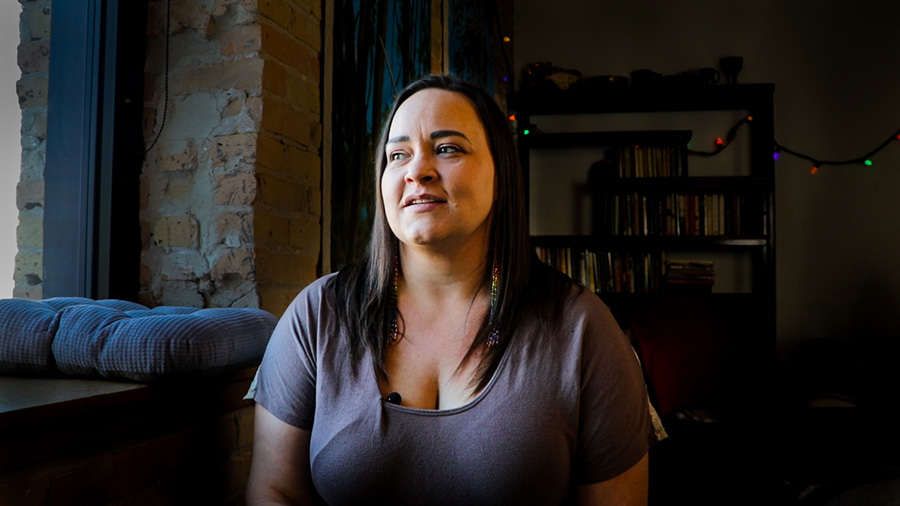
Every person is worthy of healing
I met Lisa in jail. She was awaiting sentencing. Lisa had dealt drugs, and had served time previously. Her sentence hadn’t changed her behaviour, just created a new layer of trauma. Immediately upon her release, Lisa had gone back to dealing. Within a few months, she was re-arrested and incarcerated again, this time facing what she knew would be a longer sentence.
I was at the jail to teach a Walls to Bridges course on the topic of Restorative Justice. Walls to Bridges teaches university courses inside prisons and jails to a mix of “inside students” (people who are currently incarcerated) and “outside students” (people studying at the local university). We learn together. The topic can be anything from literature to business to peace and conflict studies. All the students can earn university credits from taking the course.
Until a few years ago, people inside could take university courses by correspondence. But since universities have moved those courses online, and since incarcerated people don’t have access to the internet, that’s no longer an option.
Programming inside correctional centres is scarce and, especially with this latest round of Canadian military spending and corresponding cuts to social programs, keeps getting scarcer. Librarians have been cut from all federal institutions, and there are fears that teachers will be the next on the chopping block.
“Healing doesn’t come from isolation or shame, it comes from connection, compassion, and being seen… every person is worthy of healing.”
So Walls to Bridges courses provide rare opportunities for growth and learning, a chance to gain self-confidence, a moment of community, and an escape from the overwhelming boredom of incarceration. For outside students, Walls to Bridges courses also serve to break through stigma and biases about incarcerated people. As one outside student said to our group just before we entered the jail for the first time, “We won’t be the same people when we come out later today.” This was so true.
As you can imagine, there are unique challenges to teaching a university course with students who can’t access a full library, computers, or the internet. One of the main difficulties is communication. Usually students can easily access their professor to talk about the course or ask questions. It’s very different for inside students. They can’t drop by my office, phone me, or send me an email. They can only wait until the next time I make the trip to the institution.
For many of the women, this was not enough. None of them had taken a university course before, and many hadn’t finished high school. Fortunately, there was Lisa. Although she too hadn’t been to university, she’s an excellent writer, and became our informal “inside tutor.”
She was also the caring heart of the class. A cardinal rule for us throughout the course was to avoid physical contact. We knew that an exchange of hugs between inside and outside students would mean a demeaning strip search of the incarcerated woman after class. So on that last day we stood, awkwardly, tears in our eyes… until Lisa moved forward, arms outstretched, despite the consequences she knew she’d have to deal with.
Lisa’s story is important. She served time in a retributive jail and it did nothing to “rehabilitate” her or give her new options to help her get her life on a good path on release. As she herself says, “I know firsthand that punishment alone doesn’t heal anyone. I spent a year incarcerated, and it didn’t make me better, it made me feel smaller, more afraid, and less human.”
But Lisa’s story doesn’t end there. It’s also a story of healing and growth. In the restorative justice course, Lisa began for the first time to consider the impacts that selling drugs might have had on others. She then decided to apply to serve her federal sentence in the Okimaw Ohci Indigenous Healing Lodge:
It wasn’t until I was given the chance to go to a Healing Lodge that I truly began to heal. Surrounded by culture, ceremony, and community, I felt safe for the first time. I began to understand that healing doesn’t come from isolation or shame, it comes from connection, compassion, and being seen.
We need more Healing Lodges, more programs that honour people’s stories and offer real opportunities to heal. The current system breaks people down, but restorative justice builds people back up. I am living proof of that. These spaces, rooted in love, understanding, and culture, are what truly change lives. If we want to see an end to recidivism, we must start believing that every person is worthy of healing, hope, and another chance.
Lisa has been out for several years now. She’s in a long-term committed relationship, is sober, and is an entrepreneur. She’s an artist and an inspiring teacher who leads beading workshops, where she shares about her experiences inside. She’s now deeply committed to advancing restorative justice. So she sat down with CFSC over two days to record stories that shed light on her experiences of incarceration.
Lisa spoke from the heart. She shared passionately, with gentleness, and with humour. She talked about her emotional experiences and her own learning. And she told us details about solitary confinement, overcrowding, the over-prescription of sedatives, and other aspects of the inhumanity of caging people.
She also spoke about her very different and transformative experiences at the Healing Lodge, where she was led to explore the “why.” Why did she do what she did? What needed to be healed in her?
CFSC is so grateful to Lisa for her contributions to our work. We strongly encourage you to meet this amazing partner of ours through the Unshackled video series: https://QuakerService.ca/Unshackled
And if you attend Canadian Yearly Meeting this year, you have an additional gift in store. Lisa will be taking part in our CFSC Anniversary Celebration evening on Tuesday July 21, where she’ll be teaching beading, sharing her stories, and bringing us to tears of laughter and joy. We can’t wait to see many of you there!
Karen Ridd is CFSC’s Transformative Justice Program Coordinator.